I’m always on the hunt for interesting wartime cookbooks. This one caught my eye because of the intended audience.
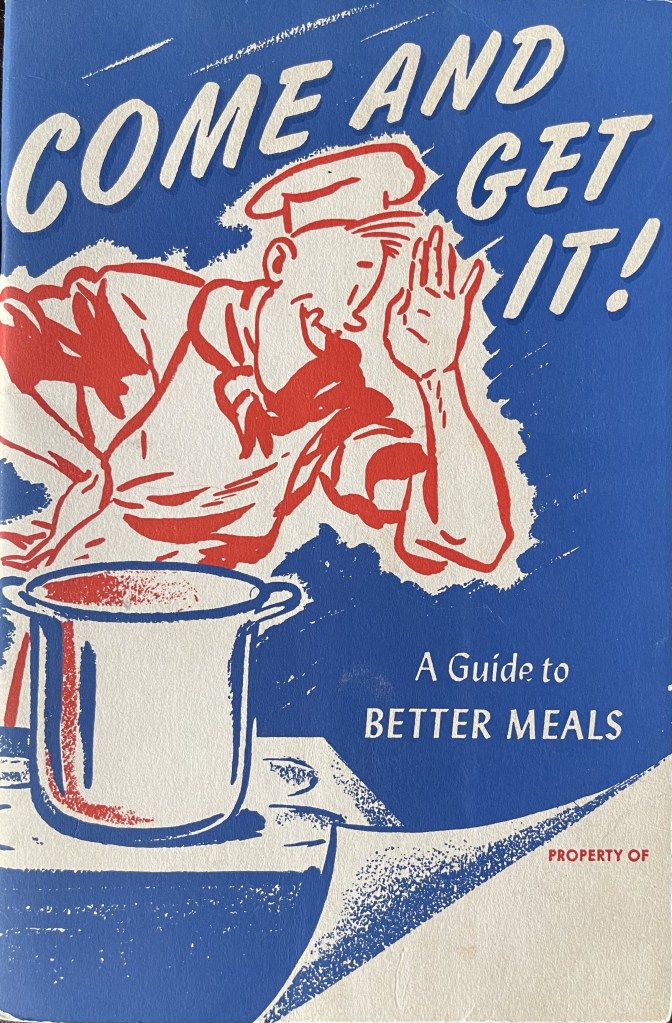
Come and Get It was published in 1942 by the General Foods Corporation. The introduction states that the cookbook was meant to be useful for mess officers, camp dietitians and institution managers who needed help with meal planning. The book would give them solid advice as well as almost 200 recipes that each made 100 servings. There’s quite a variety of recipes, too. There are soups and beverages, main dishes and desserts. The recipes also could be divided or multiplied as needed to feed whatever size crowd the cook happened to be cooking for.
Included was a plan to help the meal planner choose the best combo of foods for the day. I’ll include that here.

There were also 7 tips for menu-planning.
- Start out with the right kinds of food. The reader was directed to the above page for help choosing.
- Consider filling or staying qualities for each meal. The person planning the meals needed to consider how filling each dish was to help hold people over to the next meal.
- Include foods of contrasting flavor in each menu. Highly flavored foods were meant to be served alongside more mild foods because highly flavored foods were said to stimulate the appetite.
- Bring together foods that will give attractive color combinations.
- There should be differences in texture.
- Every meal should include a hot food or foods. The cookbook suggests soups, beverages, or entrees. This made me think about how my family currently eats. Most of our meals have a hot dish of some kind, but over the summer many of our meals are light and feature cold salads and fruits. It was 108°F today so those kinds of meals tend to be refreshing and cooling to us.
- Always have variety in your menus.
I’m going to include two days worth of menus for you to look at. I’m also going to include a few of the recipes for those menus. The menus are helpful for our planning, too, albeit in much smaller quantities!


A couple more things I wanted to add about this cookbook:
The cookbook also includes some information about General Foods products. They are listed specifically in many of the recipes. An entire section was written about the new frozen vegetables available at the local supermarket. The writers stressed how healthy and convenient those veggies were.
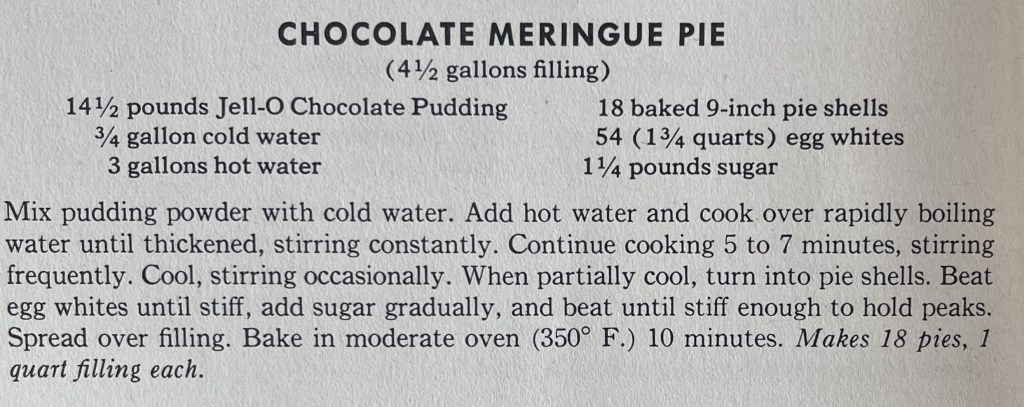
The other thing is that there was an insert tucked into this book. It’s a one-sided note about pudding with a few recipe adaptations. The insert explained that the wartime package of Jell-O chocolate pudding didn’t include milk solids due to war scarcity. I’ll include that insert below. Note that this includes the relevant changes for the chocolate meringue pie recipe from above.

I’m on the hunt for wartime recipes that work well for extra hot days this week. In this heat I am keeping the oven usage to a minimum so a filling salad or some kind of frozen dessert might fit the bill. It’s hot but we are seeing more frequent rain than usual. How is the weather where you live? Do you have a favorite recipe or meal you make when the temperature climbs? I’d love to hear from you!
 History in the Kitchen
I was expecting “meat-centric” meal planning, but I suppose the rationing during the war might have been the reason why fruits, vegetables and grains played a prominent part…either that or the authors/publishers actually understood a balanced diet. Thanks for potting this!
LikeLiked by 1 person